Market monitoring is important for many teams, but in practice it often stays at the level of "check the news when there is time." That makes it easy to miss important changes, and even when something is spotted, it may not get turned into a format that supports decisions.
This article explains how to start a recurring market watch that is simple enough to maintain, structured enough to compare week to week, and useful enough to support real business decisions.
The short answer: define the decision workflow before you define the feed
If you want a recurring market watch to last, decide these four things first:
- what decisions the watch should support
- which sources should be tracked every week
- what the weekly summary format should be
- which changes deserve immediate alerts versus weekly reporting
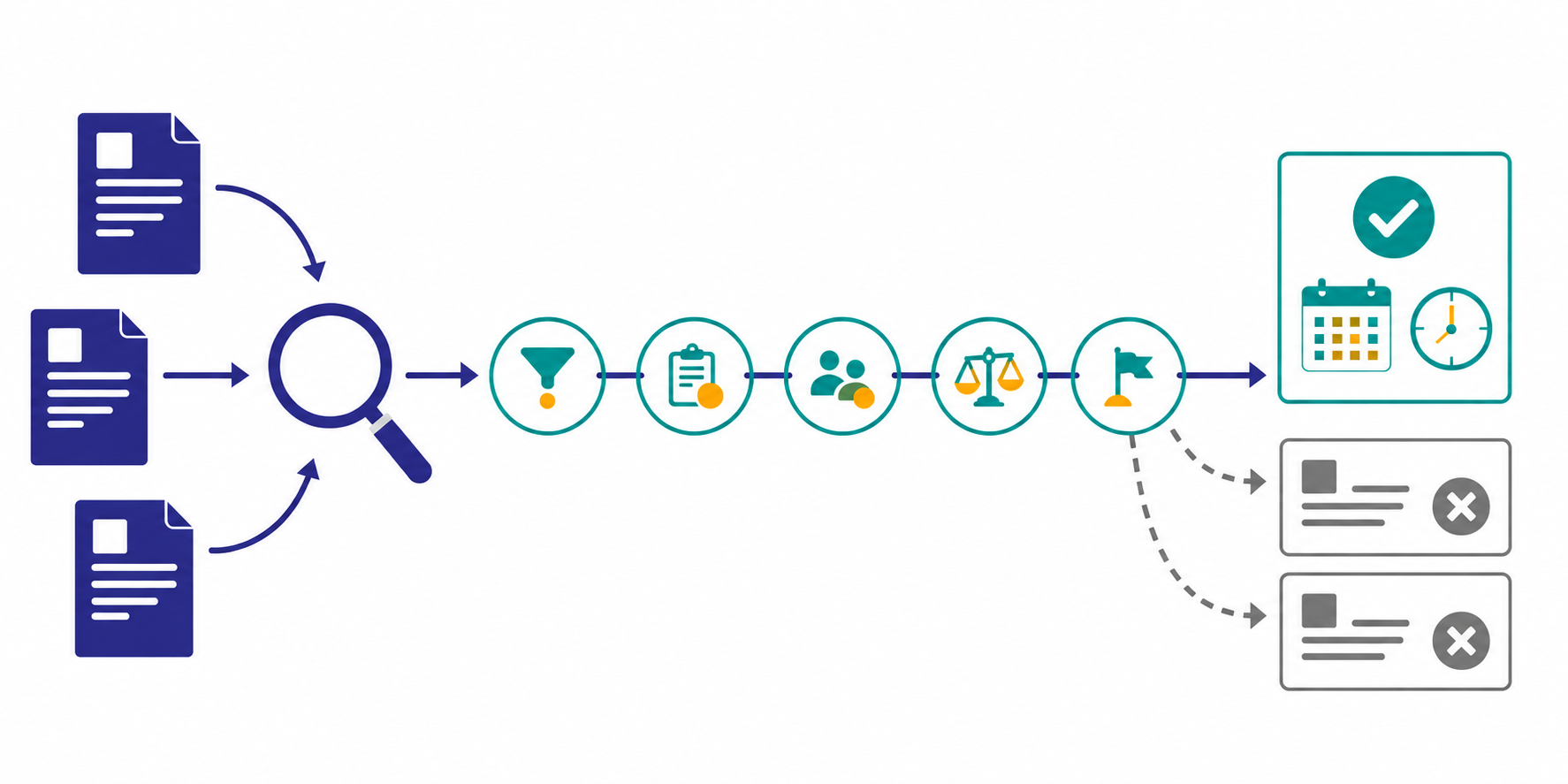
Once these are fixed, a market watch becomes more than ongoing information collection. It becomes a repeatable workflow for interpreting changes.
Why recurring market monitoring often breaks down
The issue is usually not the amount of information alone. More often, one of these areas is unclear:
- nobody knows what "enough" coverage looks like
- industry news and competitor monitoring are mixed together
- the source list changes every week
- the report format changes every week
- the audience and use case are undefined
In other words, the failure point is usually operating design, not lack of effort. The best starting point is a small repeatable system, not a broad one.
Step 1: narrow the watch to one theme
The first decision is not where to look. It is why you are looking.
Tie each watch theme to a business decision so the output is immediately usable.
| Watch theme | Signal to track | Decision it supports |
|---|---|---|
| Competitor features | release notes, product page changes | roadmap prioritization |
| Pricing strategy | pricing pages, FAQ updates | sales positioning and pricing reviews |
| Industry news | partnerships, funding, regulation changes | market focus and account prioritization |
| Technology trends | API changes, official blog posts, ecosystem launches | technical investment priorities |
For the first recurring watch, one theme is enough. If you start with several themes at once, the level of analysis usually becomes inconsistent.
Step 2: fix the source list
To make the process repeatable, decide where the watch starts instead of searching from scratch every time.
One practical way is to group sources into three layers.
| Layer | Examples | Role |
|---|---|---|
| Core sources | competitor sites, pricing pages, release notes | track direct changes |
| Supporting sources | help centers, FAQs, hiring pages, event pages | add intent and context |
| Context sources | industry media, official blogs, policy sources | explain broader market movement |
This structure helps you separate company-level moves from wider market signals.
Related help:
Step 3: standardize the weekly questions
Even with a fixed source list, quality becomes inconsistent if the review questions change every week. A simple prompt template keeps the weekly brief focused.
For example, these questions are usually enough:
- what meaningful changes happened this week
- who appears to be the target of those changes
- what implication matters for our team
- what should remain on watch next week
This is especially useful if AI is involved in summarization. Fixed questions make summaries more consistent and easier to compare over time.
Related help:
Step 4: lock the weekly brief format
Recurring market monitoring becomes hard to use when every report looks different. A fixed format makes it easier to read, compare, and reuse.
A practical weekly brief can use these four sections:
- three important changes this week
- source-backed evidence for each change
- implications for your team
- items to keep watching next week
This format works well across product, growth, and business teams because it moves quickly from signal to implication.
Step 5: split real-time alerts from weekly reporting
Not every change needs to trigger an immediate message. The workflow becomes more usable when you clearly separate urgent changes from changes that matter more in comparison over time.
| Best sharing method | Type of change | Examples |
|---|---|---|
| Immediate alert | high-impact, time-sensitive changes | large partnerships, pricing changes, major launches |
| Weekly brief | changes that are more useful in pattern form | messaging shifts, hiring trends, smaller product updates |
This keeps noise lower while still protecting the team from missing important movement.
A lightweight setup for small teams
For a small team, this is usually enough to start:
- choose one watch theme
- fix 5 to 10 seed sources
- use one weekly instruction template
- generate the brief on the same day each week
- share the summary in Slack or Teams
That setup is small enough to maintain and structured enough to become a real operating habit.
Common failure points
1. Expanding the source list too early
More sources do not automatically create better insight. Start with a smaller list that clearly supports a decision.
2. Mixing industry news with competitor tracking
Both matter, but they answer different questions. Industry news helps you understand market direction, while competitor monitoring helps you understand company tactics.
3. Producing reports that do not lead to action
A recurring watch only creates value when it helps someone decide something. Define the audience and decision use case before scaling the workflow.
When Stratum Flow is a good fit
- you want a recurring market watch your team can sustain every week
- you want competitor updates and industry news organized in one workflow
- you need a Japanese-friendly research and monitoring base
- you want summaries, notifications, and exportable reports in the same flow
Conclusion
To start a recurring market watch, the important step is not collecting more information. It is fixing the watch scope, the weekly questions, the report structure, and the sharing path.
Once those are defined, market monitoring becomes less of an ad hoc research task and more of a repeatable decision-support workflow.
Next step
Related articles
- How to Launch Your First Job After Signup and Reach Value Faster
- How to Turn Market Signals Into a Weekly Brief for Decisions
- How PMs Should Monitor Competitor Feature Releases
- 5 Ways to Automate Competitive Research
- AI Research Tools Comparison Guide 2026
- How to Run a Public Web Research Workflow
- A Weekly Intelligence Brief Template for Small SaaS Teams
- How to Write Effective Research Instructions
Related articles
- How to Turn Monitoring Results Into Weekly Team Reports
- How to Turn Market Signals Into a Weekly Brief for Decisions
- How PMs Should Monitor Competitor Feature Releases
- 5 Ways to Automate Competitive Research
- How to Streamline Market Research Report Creation
- How to Run a Public Web Research Workflow
- A Weekly Intelligence Brief Template for Small SaaS Teams
- How to Write Effective Research Instructions